


Autism is a neurodevelopmental condition where the brain functions differently, affecting how a child interacts, communicates, learns, and behaves. It is not an illness but a lifelong difference in brain development and how a child experiences the world. The problem is that detection and diagnosis often happen too late, delaying treatment that would be far more effective if started early.
Autism is typically diagnosed in childhood. In India, prevalence estimates vary, with roughly 1 to 1.5% of children affected. This suggests that about 1 in 100 children in the country may be on the autism spectrum. However, the incidence may be more as more cases are being detected due to increased awareness.
Autism arises due to genetic factors, such as having a sibling with autism or having certain changes in chromosome structure. In most children, there is no single identifiable cause. Parenting style, vaccines, or diet do not cause autism. Autism is more commonly diagnosed in boys than girls and affects children of all backgrounds. Families with neurodevelopmental histories carry an elevated risk. It affects children worldwide.
Signs typically appear between 12 and 18 months of age, though they can also emerge later, around 24 months. In some cases, children may develop normally at first and then show regression.
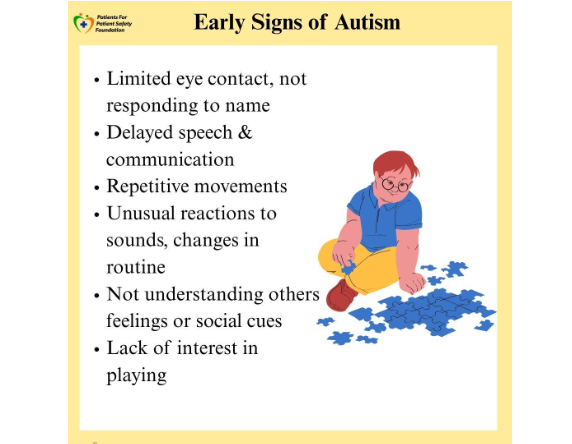
Not every child with these traits has autism, but early evaluation helps identify children who need support. Autism has significant consequences across various aspects of an individual’s life, affecting mental health, social skills, relationships, and overall well-being.
Many paediatricians can spot red flags, and parents must be courageous to take it seriously. Early intervention leads to much better outcomes. If you suspect something's wrong, seek help. The earlier you diagnose and intervene, the better. Diagnosis usually relies on:
Primary care providers may refer families to specialists such as neurodevelopmental paediatricians, developmental-behavioural paediatricians, child neurologists, geneticists, or early intervention programs that provide assessment services.
While there is no cure, treatment for children centres on therapy and support by a specialist.
Parents and caregivers play the most critical role in the journey of a child with autism.
There is no known way to prevent autism in children. Managing risk factors such as maternal health, minimising infection risk during pregnancy, and accessing prenatal care may slightly lower the risk. Genetic and environmental factors are complex and not fully controllable.
Peer support plays a vital role in building resilience. Organisations such as Action for Autism and Autism Seva Kendra offer community, practical guidance, and ongoing encouragement. Many online communities on platforms like Facebook and Instagram connect families facing similar challenges. Most paediatricians can also guide families to local resources and support groups tailored to their needs.
Seek professional help early, celebrate every small victory and progress step. Be courageous about introducing children to a variety of experiences, even if achievements look different from expectations. Therapists and parents should focus on the child’s motivations, using them to weave learning into daily life. There is no deadline for progress; learning and adaptation are possible at any age and stage.
Through vigilant observation, timely action, and collective compassion, families and communities can help every autistic child reach their full potential and thrive.