


The liver plays a vital role in metabolism, detoxification, and the synthesis of proteins, making liver health crucial for overall well-being. Liver disease encompasses a wide range of conditions that affect the liver's ability to function properly. It can be acute or chronic, with chronic liver disease (CLD) leading to progressive deterioration over time. Several liver diseases are common in India, including Hepatitis, Alcoholic liver disease, Non-Alcoholic Fatty Liver Disease (NAFLD), Cirrhosis, Liver failure and Liver cancer.
Infectious causes of Hepatitis
| Types of Hepatitis | Mode of Transmission |
|---|---|
| Hepatitis A (HAV) | Ingestion of contaminated food or water (faecal-oral route) |
| Hepatitis B (HBV) AND C (HCV) | Blood-to-blood contact, vaginal secretions, or semen (e.g., sharing needles, unsafe medical procedures) |
| Hepatitis D (HDV) | Contact with blood containing HDV; requires HBV infection |
| Hepatitis E (HEV) | Ingestion of contaminated water (faecal-oral route) |
Non-infectious causes of Hepatitis are alcohol consumption, autoimmune disorders, toxins and medications.
Hepatitis, regardless of the cause, often presents similar symptoms, especially in its acute stage. However, some individuals may remain asymptomatic, particularly in the early stages of chronic hepatitis. Common symptoms are:
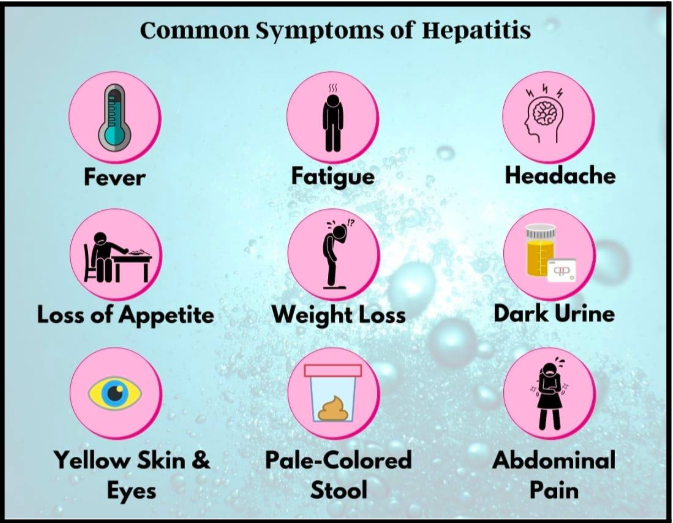
Many individuals with viral hepatitis, especially Hepatitis B and C, may not show any symptoms for many years, which is why screening and early detection are crucial. Chronic hepatitis often remains silent until significant liver damage has occurred.
Diagnosis involves a combination of medical history, physical examination and laboratory tests:
Treatment for hepatitis depends on the type (A, B, C, D, or E) and the severity of the infection.
To effectively protect yourself from all kinds of hepatitis and reduce the risk of infection, follow these common preventive practices:
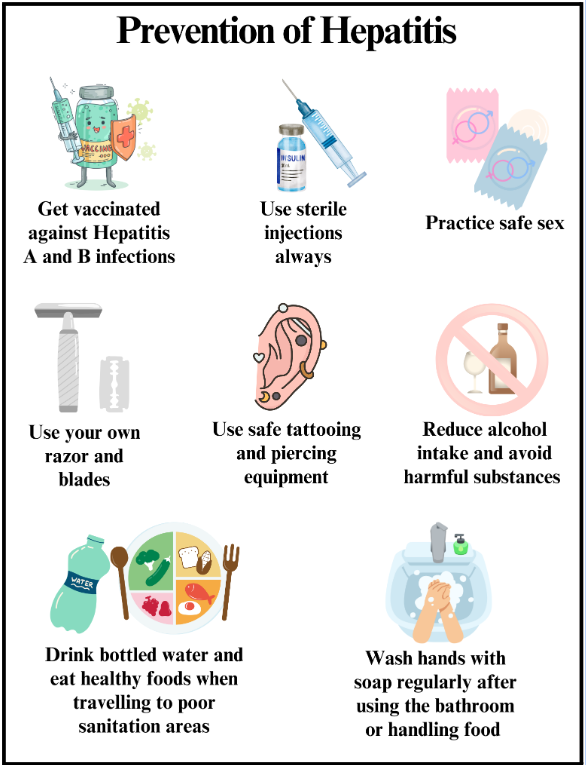
Get tested if you are at higher risk, have symptoms or have been exposed to someone with hepatitis.