Partnering for Safety: A Guide to
Preventing Infections in Healthcare Settings
When entering a hospital or clinic, the primary goal is recovery. However, an
unexpected challenge that can arise is a Hospital-Acquired Infection (HAI). An
HAI is an infection that a patient develops while receiving medical care, one
they did not have before their arrival.
These infections are largely preventable. Patient safety is a collaborative effort,
and by working in harmony with healthcare teams, patients and family members
can play an active role in maintaining a safe environment.
Understanding the Risks: Common Types and Sources of
Infection
To actively prevent infections, it helps to understand where germs typically live
and how they spread in a medical facility.
Common Types of Infections:
- Surgical Site Infections: Germs can sometimes enter the body through a
surgical incision during or after an operation.
- Bloodstream Infections: These can occur when germs enter the body
through intravenous (IV) lines or drips placed in a vein.
- Urinary Tract Infections (UTIs): These are frequently linked to the use
of urinary catheters.
- Pneumonia (Lung Infections): Chest infections can develop,
particularly in patients who require assistance from a breathing machine
(ventilator).
- Stomach Bugs (Gastrointestinal Infections): Microorganisms can
sometimes cause distress in the digestive system, leading to symptoms
like diarrhoea.
Potential Sources of Germs:
- Medical Devices: Essential tools like tubes, catheters, and IV lines create
necessary but vulnerable entry points for germs.
- High-Touch Surfaces: Bed rails, waiting room chairs, countertops and
door handles can harbour germs despite regular cleaning protocols.
- Crowded Spaces: Areas like Outpatient Departments (OPDs), waiting
areas, and busy wards naturally bring many people together, increasing
the chances of germ transmission.
- Caregivers and Visitors Are Also at Risk. Hospital-acquired infections
can affect not only patients but also caregivers, visitors, and healthcare
workers. Because healthcare facilities naturally house individuals who are
ill, the environment carries a higher concentration of germs.
Safety Steps for Patients and Families:
Hospitals follow strict disinfection and safety protocols. Families can
beautifully support these efforts by adopting a few simple, everyday habits
during both inpatient stays and outpatient visits.
- Maintain Strict Hand Hygiene
- Wash hands with soap and water or use an alcohol-based sanitiser
before eating, after using the restroom and when entering or
leaving patient care areas.
- Healthcare workers regularly clean their hands. If needed, a polite
reminder can help support shared safety.
- Practice Safe Management of Medical Devices
- Avoid touching surgical wounds, dressings, IV lines, or drainage
tubes unless necessary.
- Keep dressings clean, dry, and secure. Inform a nurse if they
become loose, wet, or soiled.
- Ask the medical team whether temporary catheters or lines are still
needed and when they can be safely removed.
- Stay Vigilant in Outpatient Departments (OPDs)
- Avoid unnecessary contact with high-touch surfaces and sanitise
your hands after touching shared items.
- If you have a cough or sneeze, wear a mask and maintain distance
from others when possible
- Keep the Care Environment Organised
- Keep the bedside area and patient room clean and clutter-free.
- Limit personal belongings and extra items to help staff clean and
disinfect surfaces effectively.
- Limit Visitors
- Limit bedside visitors to reduce the risk of spreading germs. Caregivers
should maintain good personal hygiene to protect themselves and the
patient.
- Follow Discharge and Home Care Guidelines
- Before heading home, request a clear review or demonstration of how to
clean wounds, care for any remaining devices, and administer
medications correctly.
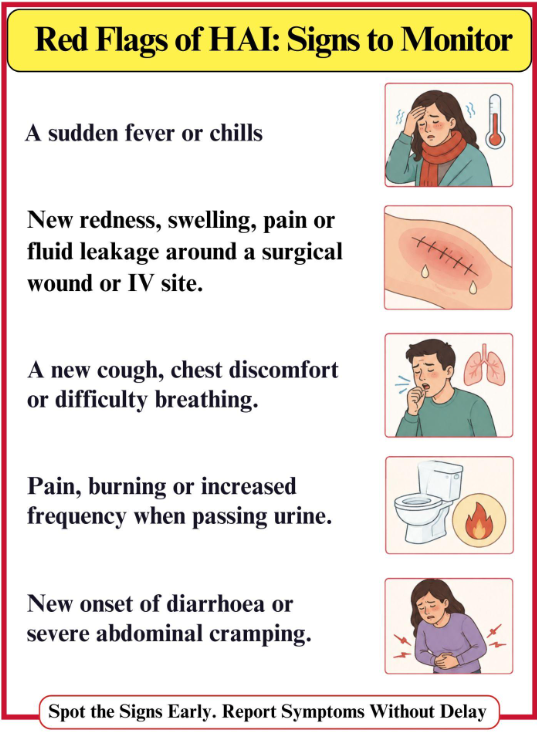
Red Flags of HAI: Signs to Monitor
Most healthcare-associated infections develop a few days after treatment begins.
Inform your healthcare team immediately if you notice any of the following
signs:
How Infections Are Managed:
If an infection occurs, healthcare teams will assess the condition and may
recommend tests such as blood tests, urine tests, chest X-rays, or wound
cultures to identify the cause.
Based on the results, doctors can recommend appropriate treatment, which may
include antibiotics, other medications, and supportive care. Always consult a
qualified healthcare professional for diagnosis and treatment advice.
Safe medical care relies on open communication and mutual respect between
dedicated healthcare staff and proactive families. By remaining observant,
reducing unnecessary visitor traffic and maintaining a clean environment,
patients and caregivers create a powerful shield against infection.