Accurately monitoring BP at home
Monitoring your blood pressure regularly is vital to help your treating doctor
and adjust your treatment plan. The most accurate is the way a doctor checks
using an Aneroid gauge and a stethoscope. However, you can easily monitor
this at home by using a good-quality digital bicep BP monitor.
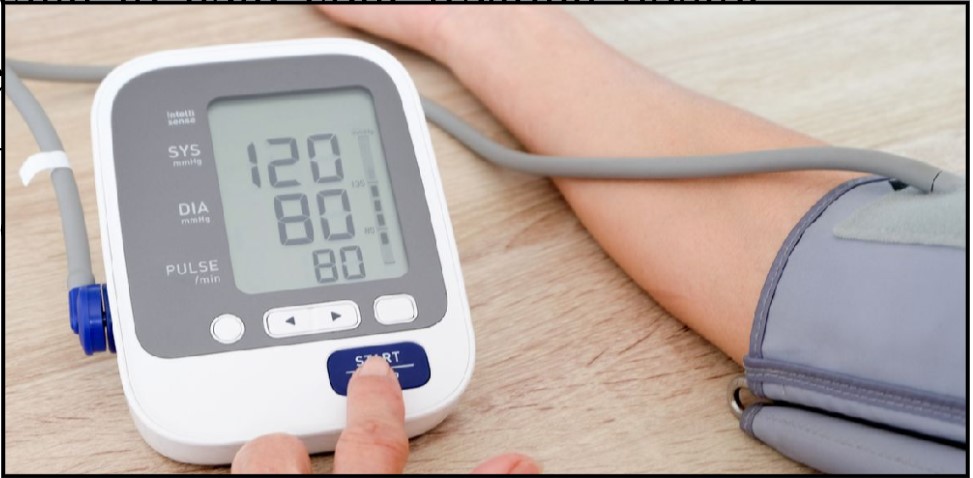
Remember to calibrate the readings of your
home instrument with your doctor's
instrument at least once a year.
There are two numbers to be monitored- Diastolic and Systolic
- Systolic, denoted by the top number, reflects the pressure exerted on
artery walls when the heart contracts and pumps blood.
- Diastolic pressure, represented by the bottom number, indicates the
pressure in arteries when the heart is at rest between beats.
The benefits of regular monitoring of blood pressure at home can:
- Early diagnosis leads to timely treatment
- Track changes or deviations for timely intervention and to assess the
effectiveness of treatment
- Higher motivation to control changes in your lifestyle.
- Maintaining BP in a healthy range to avoid further harm or medical
complications.
How to get accurate results from a digital BP monitor:
Preparation before measuring:
- Avoid smoking, drinking or exercising 30 minutes before taking your
blood pressure.
- Rest for 3 to 5 minutes if you have recently been very active.
- Empty your bladder beforehand.
- Do not measure your blood pressure right after you wake up
- Try to measure at the same time each day.
Position while measuring:
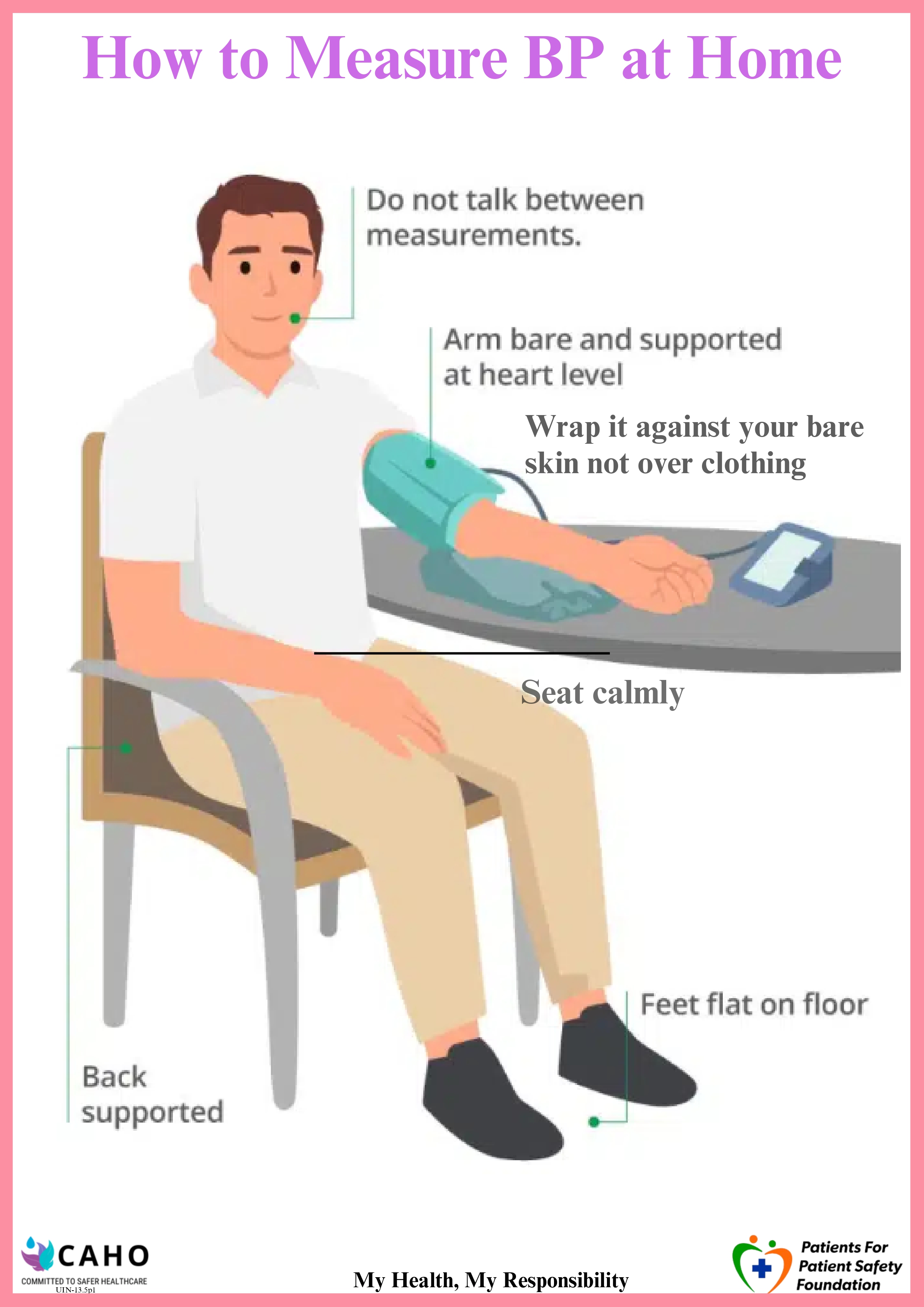
- Keep your arm straight, palm facing up on a level surface, such as a
table.
- Place the cuff on bare skin, not over clothing
- Sit with your back straight and your feet flat on the floor. Your feet
should not be crossed.
- Avoid talking and movement during monitoring.
After measuring:
- Take a repeat reading: Wait 2 to 3 minutes after the first reading. In
case your reading is unusual, repeat. Take 3 readings and use the average
of the last two.
- Maintain a log of BP readings, date, and time.
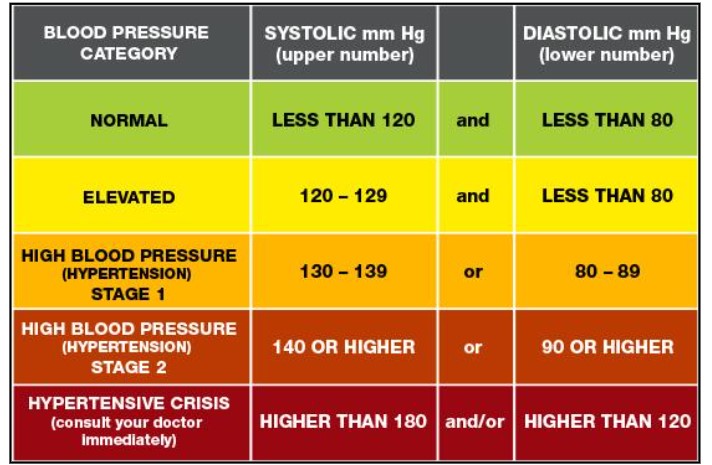
BP could vary a lot with your state of mind and the position in which you are
taking measurements. The normal range is 120/80; any readings above 140/90
need medical attention.
Range of BP readings
Blood pressure varies throughout the day. Readings are often a little higher in
the morning. Also, your blood pressure might be slightly lower at home than in
a clinical/ hospital setting. If you note any variance from the normal for 3
consecutive readings, consult your.
Change the batteries before they are fully drained. Low battery power
could give erroneous readings.