Leaking Urine Is Not Normal –
Know the Causes and Treatment
What is Urinary Incontinence:
Urinary incontinence means leaking urine when you do not want to. It happens
when the muscles or nerves that control urination are not working properly. The
leakage may be small during actions like coughing or laughing, or it may
happen more often and be difficult to control throughout the day.
It is different from other urinary problems, such as:
- Urinary retention: difficulty in completely emptying the bladder.
- Urinary tract infections (UTIs): pain or burning while passing urine,
but no leakage.
- Overactive bladder: feeling a strong or sudden urge to urinate,
sometimes without leakage.
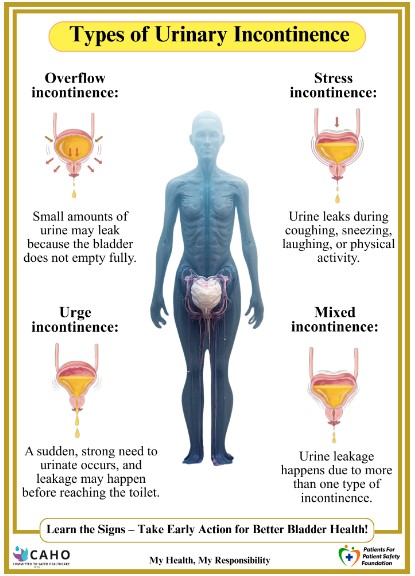
Types of Urinary Incontinence:
How Common is Incontinence in India:
Urinary incontinence is a common issue across India, particularly in women and
older adults. Age, childbirth history, obesity, chronic cough, diabetes and other
health issues can raise the risk. Research shows that about one-third of adult
women report some symptoms of incontinence, and the percentage goes up to
around one-fourth in older women. In men, it is less common early in life, but
the chances rise significantly in older age as well.
Common causes include:
- Weak pelvic floor muscles after pregnancy or childbirth, and hormonal
changes during menopause that affect bladder control
- Prostate problems in men
- Obesity, which puts extra pressure on the bladder
- Nerve problems (such as diabetes, stroke, or spinal injury)
- Certain medicines and excessive intake of caffeine, alcohol or carbonated
drinks
Sometimes, temporary incontinence can occur due to urinary infections or while
recovering from surgery. Identifying the exact cause helps in choosing the right
treatment.
What are the Symptoms:
Symptoms usually vary and depend on the type of incontinence you have. They
may include:
- Leaking urine during activities like exercise, laughing, coughing,
sneezing, bending over or during sexual intercourse
- Sudden urge to use the bathroom, but only a small amount comes out
each time
- Needing to urinate more than eight times during the day
- Waking up more than twice at night to urinate (nocturia)
- Bedwetting during sleep (enuresis) in adults or the elderly
It is important not to ignore these symptoms. Seek professional help quickly.
Diagnosis:
Doctor can usually diagnose urinary incontinence through a few simple steps:
- Taking a detailed medical history about when and how the leakage
happens
- Physical examination to check pelvic floor or prostate health
- Urine tests to detect infection or other abnormalities
- Keeping a bladder diary to record how often and how much you urinate
each day
- Tests such as ultrasound and urine flow measurement in special cases
These tests help to find the right cause and decide which treatment will work
best.
Treatment Options:
Your doctor will suggest a plan that fits your personal condition and health.
Urinary incontinence can often be improved or even cured through:
- Lifestyle adjustments such as changing fluid intake, avoiding bladder
irritants like caffeine and maintaining a healthy weight
- Pelvic floor exercises (such as Kegels) to strengthen the muscles that
control urination
- Bladder training, timed voiding and delaying urination to increase control
- Medicines that may help control symptoms or treat underlying causes
- Devices or absorbent pads for temporary or mild symptoms to avoid
embarrassment
- Surgery or other medical procedures, in some rare cases
Living With Urinary Incontinence:
Small changes can make a big difference. Urinary incontinence is common,
treatable and nothing to be ashamed of. With proper advice and treatment,
symptoms can improve or even disappear. Speak to a healthcare provider for
help, as early management leads to better outcomes.
You can improve your comfort and confidence by following these steps:
- Practice regular pelvic floor exercises
- Avoid foods and drinks that irritate the bladder
- Use absorbent pads for travel or social occasions
- Keep bathrooms within easy reach and plan toilet breaks
- Wear comfortable clothes for easy bathroom access
- Maintain a healthy weight and manage chronic diseases like diabetes or
hypertension