How Your Daily Posture Shapes Your Joint Health
Your posture is about how you stand, walk, sit, and sleep. Good posture plays
an important role in avoiding health issues. Posture-related problems are
increasing, impacting individuals of all ages in today's sedentary lifestyles. Poor
posture leads to many physio-somatic health problems, ranging from joint pain,
muscle pain and discomfort to more severe conditions. Proactive steps can help
prevent these issues.
Introduction
- Sedentary lifestyle and screen time: Prolonged sitting without adequate
breaks or movement can lead to muscle stiffness.
- Poor ergonomics: Using furniture, such as chairs or desks, that is not
designed properly for long working hours creates discomfort and results
in strained muscles, which ultimately lead to fatigue.
- Muscle weakness or imbalance in the core, back and neck, as they are
unable to support the body properly.
- Injury or trauma: Past injuries or trauma to the spine, muscles or joints
can affect posture by limiting mobility or causing compensatory
movements.
- Carrying excess weight can place additional stress on the spine and
muscles, leading to postural deviations.
There are other factors like having a flat foot, genetic predisposition and poor
sleeping habits which can also lead to poor posture.
Signs and symptoms of bad posture
- Persistent or recurring pain, tightness, or discomfort in the back, neck,
shoulders, hips or any major joints.
- Numbness, tingling sensation or weakness in the arms, hands, or legs,
caused by nerve compression
- A slouched or hunched posture restricts lung capacity and makes it
harder to breathe deeply, which will ultimately result in poor oxygen-
carrying capacity and results in the hypoxic state to the patient.
- Difficulty maintaining balance or coordination, which may increase the
risk of falls or accidents
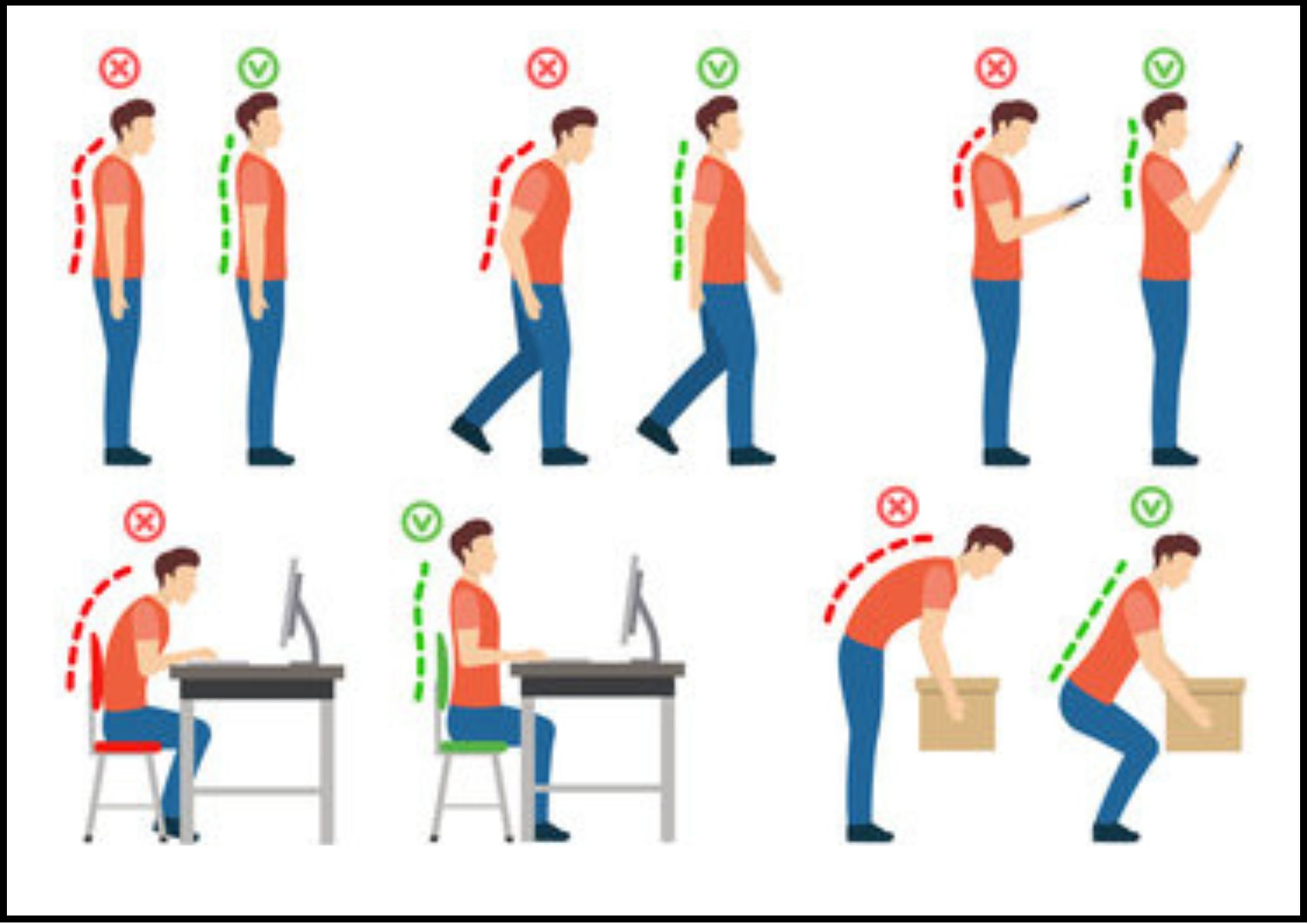
- Rounded shoulders, hunched back, forward head posture or other
noticeable changes in spinal alignment.
Bad and good posture
When to seek medical help
Poor postures are normally visible to the naked eye. You can personally feel the
discomfort in your routine. Your family and friends can point it out. If you
continue to have symptoms, see a doctor to determine what is causing the
problem and its treatment.
A lot of times, posture-related problems can be cured with lifestyle modification
and behavioural modification. But a physician consultation must be sought out
to rule any underlying condition. The doctor may diagnose an underlying
condition that can be treated, such as osteoporosis or arthritis. They may also
advise you to see a physiotherapist, who can help you develop a routine of
stretches and exercises for strengthening the muscle groups that will help you
correct your posture.
Preventive measures for maintaining good posture:
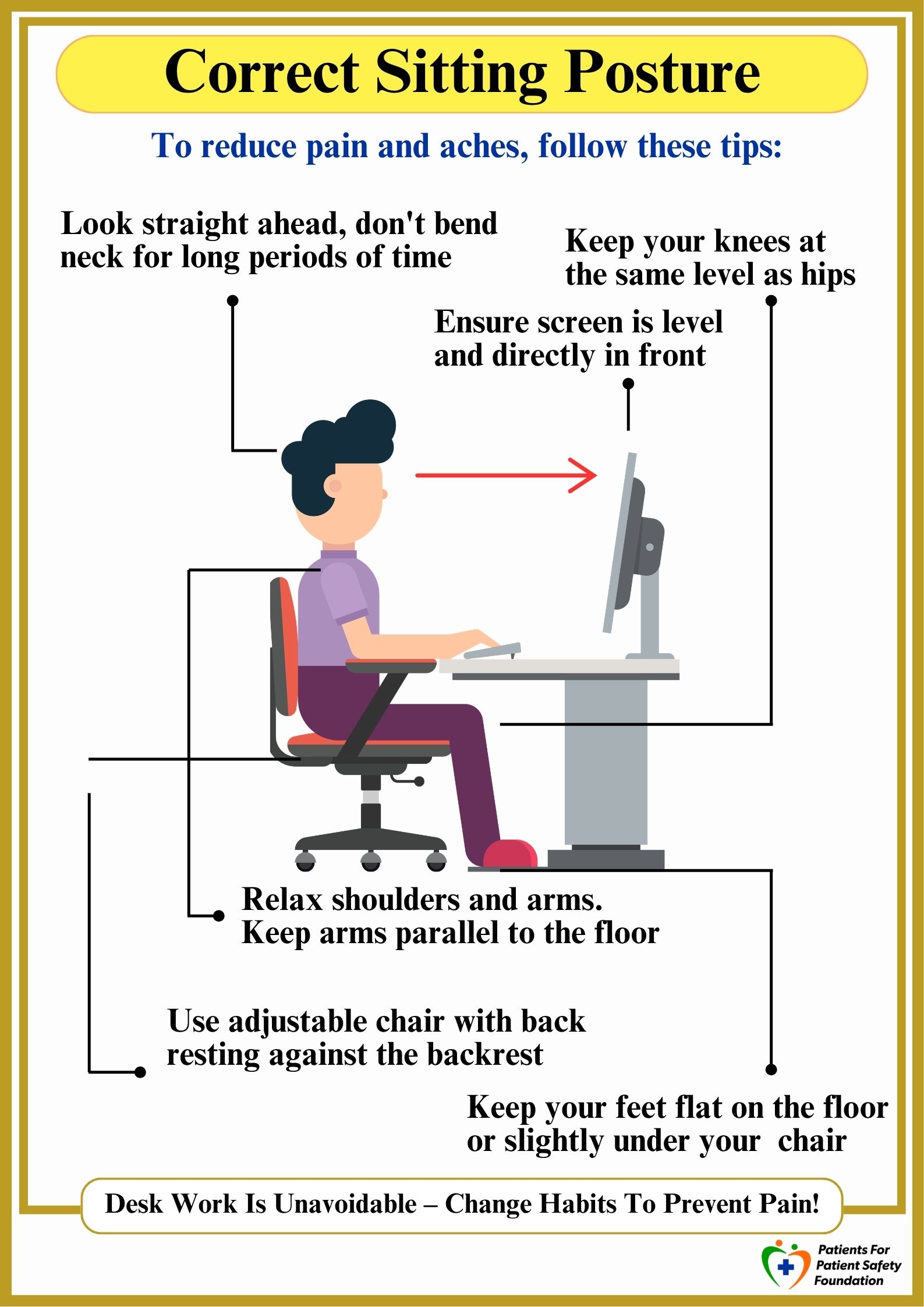
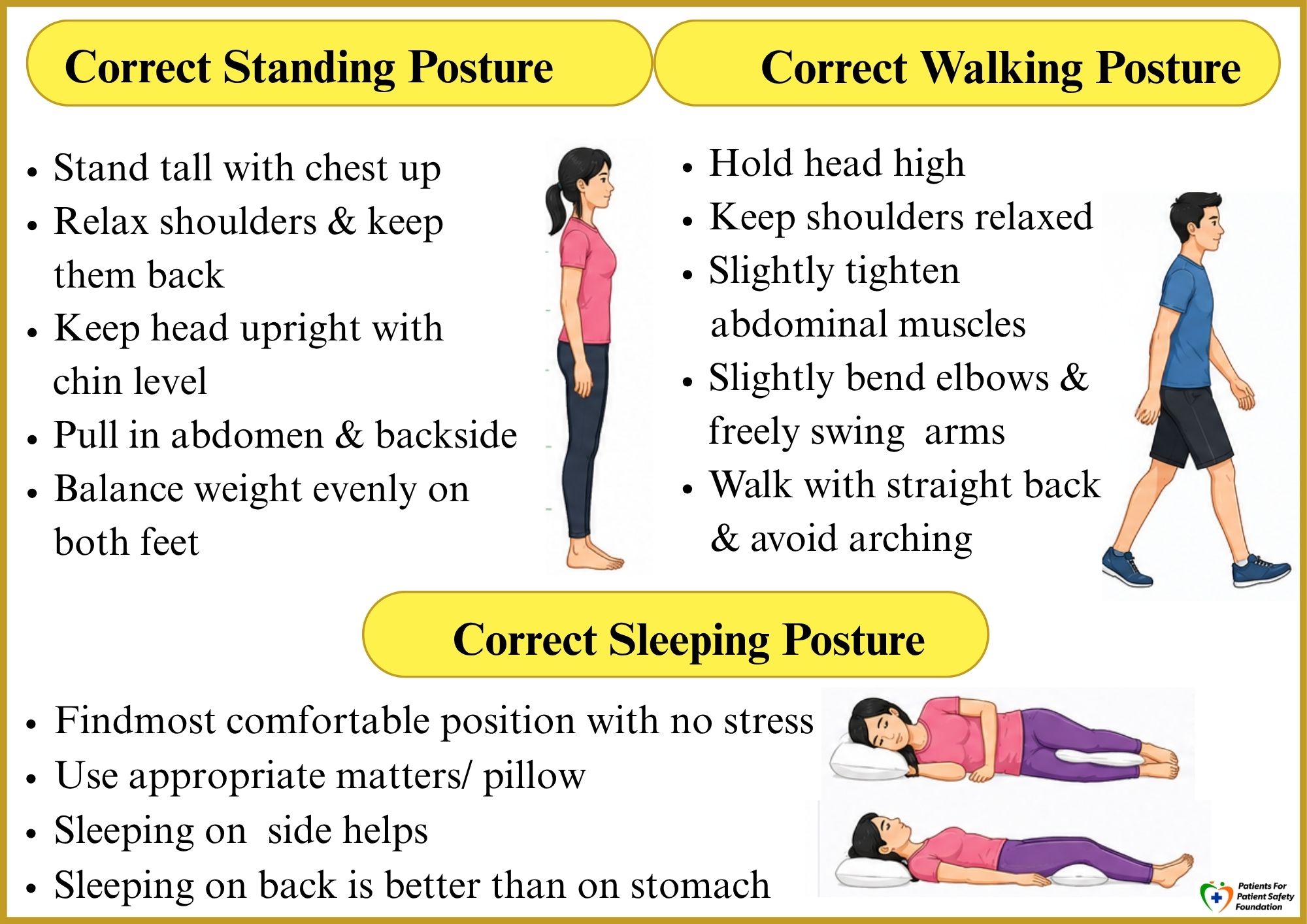
Correct Posture while Working
Lifestyle changes to improve posture
- Be conscious of your posture: with increased workload and long working
hours, you might not be conscious of your posture. But regular
movements and breaks in between will help you to maintain the posture.
- Strengthen your core: A strong core helps support your spine and
improve your posture. Regular exercises such as yoga will help.
- Stretching regularly can help keep your muscles flexible and reduce
muscle tension.
- Take regular breaks: Don't sit for long periods; take breaks to stretch
and move around. Aim to stand up and stretch every 30 minutes. Do not
sit/maintain the same posture for more than 45 minutes.
- Proper Footwear: Wear supportive shoes that provide adequate arch
support.
By incorporating these lifestyle changes, you can gradually improve your
posture and reduce the risk of associated pain and discomfort.