


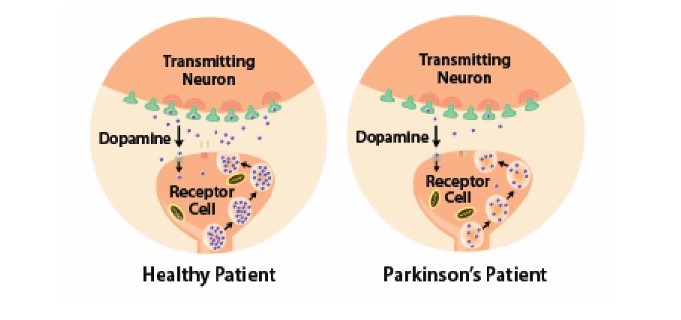
Parkinson's Disease is a chronic, progressive neurological disorder, ranking second among age-related degenerative brain diseases and the most common motor-related brain disease. The condition is caused by the gradual loss of nerve cells in a part of the brain that produces dopamine. As dopamine levels decline, individuals experience difficulty with movement, balance, and other motor functions.
The prevalence of Parkinson's Disease in India is increasing due to better diagnosis. One study indicates it could be up to 43 cases per 100,000 population.
Risk increases significantly with age, affecting about 1% of individuals over 60 years old. It is more common in men than in women. Environmental factors and ongoing exposure to herbicides and pesticides may slightly increase your risk.
Symptoms usually begin gradually and worsen over time.
In the most severe cases, a combination of these factors can lead to a significant decline in overall health, reducing the body's ability to fight infections or recover from injuries—ultimately resulting in death.
Diagnosing Parkinson's disease is primarily a clinical process, relying on a thorough medical history and analysing symptoms, and a neurological examination to assess motor symptoms like tremors, slowness of movement and rigidity.
While there is no definitive test for Parkinson's, the following are often done to eliminate other possibilities:
Parkinson's disease is not reversible. Current treatments aim to manage symptoms and slow progression.
Treatments vary from person to person, depending on their specific symptoms and the effectiveness of certain medicines. Medications are the primary way to treat this condition. And may need adjustments based on how the body responds.
In addition, various supportive therapies such as physical therapy, occupational therapy, and speech and language therapy can help manage daily symptoms and improve quality of life.
Patients and caregivers play a crucial role in managing Parkinson's through adherence to treatment plans, lifestyle adjustments, and maintaining a supportive environment. Regular monitoring and communication with healthcare providers are essential.
While there is no proven way to prevent Parkinson's, maintaining a healthy lifestyle, including regular exercise and a balanced diet, may help reduce the risk. Genetic factors also play a role, so awareness of family history is important.